RPG Character Creation Step by Step: Ability Scores and Backstory
Ask five players how to create a tabletop rpg character and you will get five different starting points: a class, a portrait, a single line of dialogue, a mechanical combination someone read about, a grudge. All five work. What does not work is opening the book at chapter one and filling in fields from top to bottom, because the numbers only make sense once you know what they are for.
This rpg character creation guide runs in the order that tends to hold up: concept, then numbers, then the connections that make the character part of a group rather than a stranger who happened to be in the tavern.
Start before the ability scores
Write one sentence describing what the character does when a plan fails. Not their profession, not their tragedy — their reflex. A character who argues, a character who leaves, a character who sets something on fire: each of those is a different evening at the table, and each points at different ability scores without you having to choose them yet.
The sentence also survives a change of system. Groups switch games more often than they admit, and a concept expressed as a reflex ports cleanly while a concept expressed as a class does not.
RPG character creation, step by step
RPG character creation has no canonical order, but the step by step sequence that causes the fewest rewrites is this: concept, role in the party, numbers, equipment, backstory, ties to the other characters. Most books present it almost backwards, and the result is a character sheet that is complete and a character nobody can play.
Doing it step by step also catches the duplication problem early. If two players arrive at session zero with the same role, that is easy to fix at the concept stage and painful to fix after both have spent an hour on numbers.
Setting ability scores: three methods
Most systems in the d20 tradition offer a standard array, a point-buy pool and a rolling method. The array hands everyone 15, 14, 13, 12, 10 and 8. Point buy gives 27 points to spend across a range of 8 to 15, with the top values costing more than their share. Rolling four dice and dropping the lowest averages 12.24 per score.
The choice is a statement about the campaign rather than a preference. Rolling produces parties where one character is visibly luckier than the rest, which is fine if everyone signed up for that. Point buy and the array produce parties that start level, which matters more the longer the campaign runs. Whatever the table settles on, the part that matters is that everyone uses the same method. A rolled character sitting beside a bought one is compared for the entire campaign.
Not every system works this way at all. Pathfinder 2e assigns ability boosts in stages, and several modern games skip numeric ability scores entirely, which makes the question of how to generate them disappear rather than answering it.
Backstory the referee can actually use
A backstory is raw material for someone else's work. Its value is measured in hooks — a person who is owed something, a place the character cannot go back to, a question they would change plans to answer. Three of those is generous. Six pages of genealogy with none of them is a document the referee will skim once.
Leave gaps on purpose. A backstory that answers everything gives the referee nothing to invent, and the moments players remember are usually the ones where their own history turned out to contain something they did not write. Name the mentor, but not what happened to them.
What a tabletop group settles before play
Characters are built for a specific table, and a tabletop group that skips the conversation pays for it in session three. Agree the tone, the expected level of violence, whether the party knows each other already, and whether anyone is playing a character whose reflex is to leave. That last one has ended more campaigns than any monster.
The other thing worth agreeing is scheduling reality. A tabletop campaign that meets fortnightly cannot carry a character who only becomes interesting at level eight, and it is kinder to know that before writing the arc.
Ties, equipment and the last hour
Finish by connecting the sheet to the other sheets. Each character should have one prior relationship with someone else at the table, even a thin one. Parties assembled from strangers spend their first two sessions inventing a reason to cooperate, and it shows.
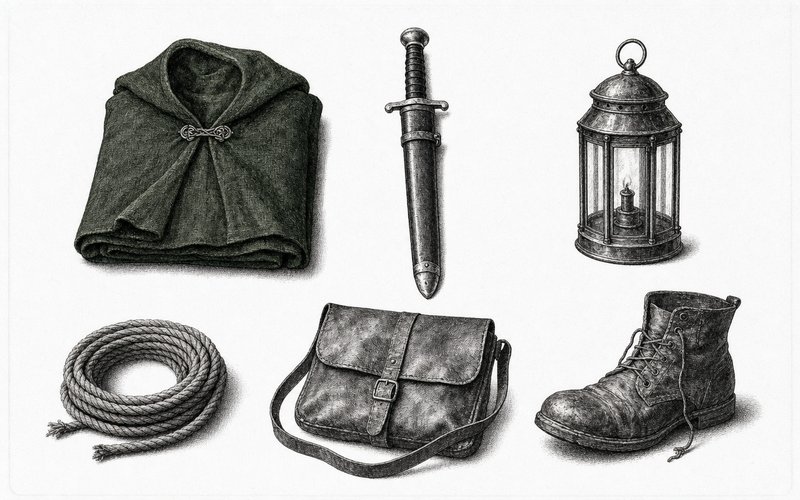
Equipment is quicker than it looks: take the package the book offers, then swap one item for something the concept demands. The character who carries their old service knife instead of a standard dagger has told you more than a paragraph would.
Using an rpg character creation guide at the table
Bring this rpg character creation guide to session zero rather than working through it alone at home. Anyone working out how to create a tabletop rpg character in a room with the other players makes better choices, because the gaps in the party are visible and the ties write themselves.
And expect the first version to be wrong in one specific way. Classic Traveller was famous for a chargen system that could kill the character before play began; nothing modern goes that far, but every system quietly discards a first attempt. Play it for three sessions, note the one thing you keep wishing the character could do, and fix that.
Common questions
What is the first step in rpg character creation?
Deciding what the character does when things go wrong. Everything mechanical follows from that, and a concept written in one sentence will survive rules you have not read yet.
Should I roll ability scores or use point buy?
Roll when the group wants variance and is prepared to live with it; use point buy or the standard array when it matters that everyone starts level. Mixing the two in one party is what causes trouble, because the rolled character is measured against the bought one all campaign.
How long should a backstory be?
Short enough that the referee reads all of it. Half a page with three usable hooks beats six pages of family history, because the half page will actually appear in play.
How to create a tabletop rpg character with no experience?
Take a pre-generated character for the first session, or pick the option the book recommends for new players. You learn more about what you want from one evening of play than from an afternoon of reading, and the second character is always better.
Does an rpg character creation guide apply across systems?
The order does; the mechanics do not. Concept, then numbers, then ties to the other characters works in almost every system. Whether those numbers are ability scores, playbook moves or percentile skills is a local detail.